
.
.
.
Monitoring
Past to Present
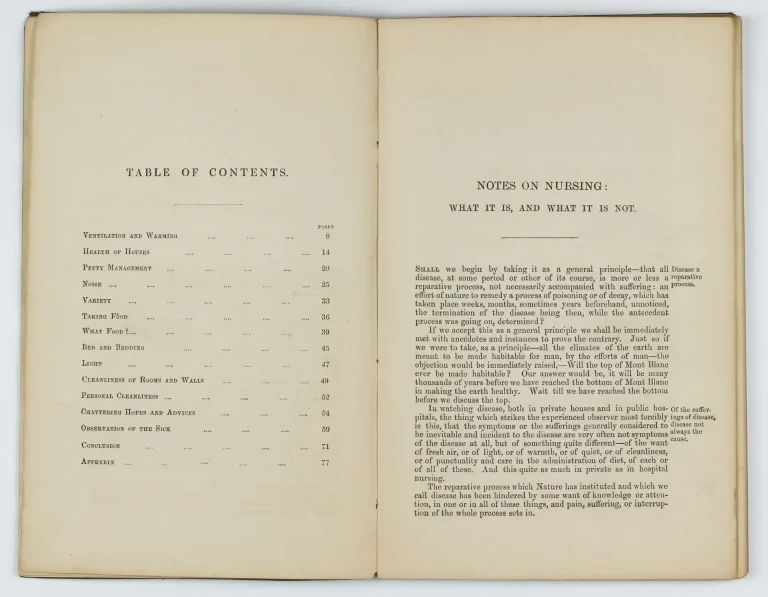
Children in England learn about Florence Nightingale during primary school, often remembering her as "The Lady with the Lamp" who transformed nursing and advocated for clean air and healthy buildings.
Florence understood that people quickly become accustomed to stale air and cannot reliably judge air quality with their senses alone. To address this, she championed the use of an "air-test" developed by Dr Angus Smith, believing that a simple air quality monitor should become as commonplace as a thermometer in hospitals, nurseries, schools, and homes.
Her vision was remarkably modern. Today's carbon dioxide and indoor air quality monitors serve the same purpose she envisioned, providing objective evidence of air quality rather than relying on perception alone.
Florence was particularly concerned about schools. Reflecting on overcrowded classrooms, she wrote:
"And oh, the crowded national school! Where so many children's epidemics have their origin, what a tale its air-test would tell!"
She imagined parents using air quality measurements and declaring:
"I will not send my child to that school, the air-test stands at 'Horrid."
More than 160 years ago, Florence recognised that crowded, poorly ventilated indoor spaces could contribute to the spread of illness. Clean air, good ventilation, and objective monitoring are essential for creating healthy learning environments and protecting the wellbeing of children and staff.
Monitoring Today
Smoke detectors and carbon monoxide monitors have been installed inside schools for decades. In recent years, technology has evolved, bringing low-cost air quality monitors to the general public. These monitors can provide an immediate and simple way to determine levels of some air pollutants and, by doing so, guide action.

"By making the invisible world of indoor air visible, air quality monitoring solutions give us the power to understand our spaces. This insight unlocks adaptive ventilation, providing fresh air when needed and cutting energy waste".
Sotirios Papathanasiou
Safe Air Schools' air quality expert. Founder of GO AQS. Speaker at The United Nations in New York, Healthy Indoor Air, A Global Call to Action (2025)
Monitoring Carbon Dioxide (CO₂)
Carbon dioxide (CO₂) is a natural gas that we breathe out every time we exhale. Because people constantly release CO₂ into the air, CO₂ can be used as a simple indicator of how well a room is ventilated. The higher the CO₂ level, the more "shared air" is being re-breathed.
During the COVID-19 pandemic, the Department for Education (DfE) provided CO₂ monitors to schools across England and advised that they should be used regularly to identify spaces where ventilation could be improved. However, schools are not required to record or share the data, and many have received limited training in using the monitors effectively. Of those surveyed, most schools admitted to no longer using them.
CO₂ is measured in parts per million (ppm). Outdoor air typically contains around 415 ppm of CO₂. In well-ventilated classrooms, indoor levels should remain low. The DfE states that 800 ppm is good. When CO₂ levels rise beyond 800 ppm in a naturally ventilated classroom, ventilation is inadequate. As levels rise above 1000 ppm, a significant proportion of the air has already been exhaled by others.
This matters because if someone in the room has an airborne infection, poorly ventilated spaces can allow virus particles to build up in the air, increasing the risk of transmission. For this reason, experts recommend aiming for CO₂ levels below 800 ppm in naturally ventilated classrooms.
"CO2 levels will be constantly changing so you should check the monitor regularly".
- Department for Education
Every classroom should have a CO₂ monitor on display to track ventilation levels in real time. Natural ventilation through open windows can vary greatly with weather conditions and tends to be more effective when the outdoor air is colder. In winter, for example, a classroom may be well ventilated without fully opening all windows, or simply by refreshing the air for a few minutes every half hour. CO₂ monitors can help strike a balance between maintaining comfort and managing heating costs while ensuring good air quality.
CO2 monitors should be placed:
- At head height when seated
- Away from ventilation outlets, such as grilles or windows
- At least 0.5 m away from occupants (closer than this could give inaccurate readings).
Monitoring Air Quality
There is limited information on the accuracy of some low-cost air quality monitors in detecting indoor pollutants. Models differ in size, intended use (indoor or outdoor), and the specific contaminants they are designed to measure. Many devices provide unreliable or even inaccurate readings, particularly for volatile organic compounds (VOCs), such as chemical vapours and formaldehyde. It is therefore important to research products carefully before purchasing. The guide by HouseFresh is an excellent place to begin.
Current CO₂ Guidance
Carbon dioxide (CO₂) is widely used as an indicator of how effectively a space is ventilated.
Current DfE guidance states that:
- Mechanically ventilated classrooms should achieve a daily average CO₂ concentration below 1,000 ppm.
- Naturally ventilated classrooms should achieve a daily average CO₂ concentration below 1,500 ppm.
- In naturally ventilated classrooms, CO₂ concentrations should not exceed 2,000 ppm for more than 20 consecutive minutes each day when occupancy is at or below the room’s design capacity.
The Health and Safety Executive (HSE) advises that CO₂ levels consistently above 1,500 ppm indicate poor ventilation and that action should be taken to improve air exchange.
Higher CO₂ levels are also associated with increased feelings of tiredness, headaches and reduced concentration, which may affect the learning environment.
Why CO₂ Levels Matter
CO₂ itself is not harmful at the concentrations normally found in classrooms. However, it provides a useful indication of how much exhaled air is accumulating indoors.
A classroom averaging 1,500 ppm CO₂ contains a greater proportion of rebreathed air than a classroom maintained closer to 800 ppm. If an infectious person is present, poorer ventilation can allow virus-containing particles from breathing, speaking or coughing to remain in the air for longer.
Improving ventilation helps dilute and remove these particles, reducing the risk of airborne infections such as COVID-19, influenza and RSV spreading within classrooms.
Recommended Indoor Air Quality Targets
Many organisations now recommend lower CO₂ levels than those permitted by current DfE guidance:
- The British Council for Offices (BCO) recommends a target of 800 ppm.
- The Federation of European Heating, Ventilation and Air Conditioning Associations (REHVA) recommends maintaining indoor CO₂ levels around 600–800 ppm.
- The Scientific Advisory Group for Emergencies (SAGE) has advised keeping CO₂ concentrations below 800 ppm wherever possible.
These recommendations reflect growing recognition that good indoor air quality supports health, concentration and well-being.
Learning from Ireland
The Republic of Ireland has taken a stronger approach to indoor air quality. The Health and Safety Authority (HSA) has introduced a Code of Practice for Indoor Air Quality, providing a formal framework for managing air quality in workplaces and educational settings.
The Code includes a benchmark of 1,000 ppm CO₂ and provides practical guidance on monitoring indoor air quality and taking action where ventilation is insufficient. Where natural ventilation cannot achieve suitable air quality, additional measures such as mechanical ventilation or air cleaning may be required.
Ireland’s approach demonstrates the value of clear standards, monitoring and practical guidance for improving indoor environments.

Donate to Support Safe Air Schools
Community Interest Company No. 16405838. Registered Office: Southgate Chambers, 37 Southgate Street, Winchester, Hampshire. England, SO23 9EH
©2026 Safe Air Schools UK CIC