
Outdoor Air
What Are Outdoor Pollutants
Studies have shown that air pollution can impact health even at lower concentrations than previously thought. In 2021, the World Health Organisation (WHO) updated its air quality guidelines to reflect new scientific findings on the health effects of air pollution. The UK has not yet committed to meeting the 2021 WHO Air Quality Guidelines, designed to protect public health.
Research shows that 80% of particulate matter inside schools comes from outside, and keeping windows closed doesn't block pollution; it traps CO2 and increases the risk of infections.
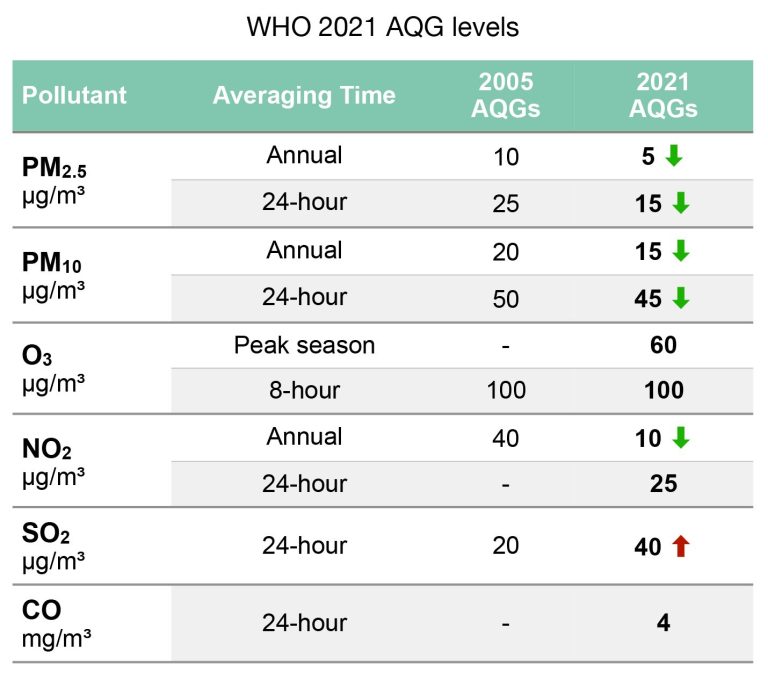
Outdoor pollutants include:
Particulate Matter
An umbrella term for the microscopic particles suspended in air. They are defined by their diameter to regulate air quality. PM2.5 particles are so small they can penetrate deep into lungs enter the bloodstream, and be transported to every organ in the body. Sources of particulate matter are both natural and man-made and produced both indoors and outside.
Ozone
Ground-level ozone is not emitted directly into the air but is created by chemical reactions between volatile organic compounds and nitrogen oxides in the presence of sunlight.
Nitrogen Oxides
Gasses produced by power generation and domestic heating, contributing to acid rain and smog formation.
Sulphur Dioxide
Created by burning fossil fuels like coal and oil, it contributes to acid rain.
Carbon Monoxide
Produced by incomplete combustion of fuels like wood, charcoal, and gasoline.
Volatile Organic Compounds
Gasses emitted from paints, cleaning products, and building materials.

Donate to Support Safe Air Schools
Community Interest Company No. 16405838. Registered Office: Southgate Chambers, 37 Southgate Street, Winchester, Hampshire. England, SO23 9EH
©2026 Safe Air Schools UK CIC