
.
.
.
Classroom Air Quality: An Invisible Risk
Many people assume the air inside a building is cleaner than the air outside, but this is rarely the case. In fact, indoor air can be 2 to 5 times more polluted than outdoor air and, in extreme cases, up to 100 times more polluted.
Children Face Greater Risks
Outside of the home, children spend most of their time inside school. They learn in classrooms that are roughly four times more crowded than a typical office space. More people sharing the same space means carbon dioxide (CO₂), airborne viruses, and other pollutants build up rapidly.
Children breathe the same air as adults, but they do not share the same risks. They are uniquely vulnerable to air pollution because:
- Developing Bodies: Their lungs, immune systems, and brains are still growing.
- Higher Intake: They breathe in more air relative to their body weight than adults.
- Higher Activity: Being physically active causes them to breathe faster and deeper.
- Smaller Airways: Irritation and inflammation cause greater airway blockages.
- Prolonged Exposure: They spend consecutive hours inside poorly ventilated rooms.
- Lifelong Impact: Childhood damage can permanently affect lifelong lung development.
Other Vulnerable Groups
The classroom environment can also disproportionately impact pregnant staff, individuals with allergies or asthma, people with chronic heart or lung conditions, and anyone with a weakened immune system due, for example, to illness or medical treatment.
Understanding Air Inside Schools
Indoor air quality is shaped by a mix of external and internal sources. Children breathe in a combination of pollution, allergens and contaminants entering from outdoors, and contaminants generated right inside the classroom.
- The Outdoor Link: Up to 80% of fine particles (PM2.5) found indoors can originate from outdoor sources, particularly road traffic pollution. Analysis including research from the UK’s SAMHE Initiative shows that little particle pollution is generated inside the classroom; instead, it infiltrates from outside.
- Trapped Air: Simply closing windows is not a complete solution. While it may reduce the entry of outdoor pollution, it also reduces fresh air exchange, allowing carbon dioxide (CO₂), airborne viruses, moisture and other indoor pollutants to build up. Outdoor particles can also continue to enter through building cracks, doors and ventilation systems.
- The CO₂ Monitor: In crowded classrooms, carbon dioxide levels spike quickly. While CO₂ itself is not dangerous at typical levels, high readings are a warning sign of stagnant air. This can cause headaches and fatigue, reduce students' concentration, and allow airborne viruses to accumulate.
How Indoor Air Affects Health
When we breathe, airborne particles, droplets, and aerosols containing microorganisms are inhaled into the lungs. Research from Lancaster University reveals that ultra-fine pollution particles can cross the lung lining into the bloodstream, transporting toxins throughout the entire body. Because of this systemic reach, the World Health Organisation classifies air pollution as a top environmental health risk to young people.
Poor indoor air quality directly results in:
- Worsened symptoms for asthma and allergies.
- Higher transmission rates of airborne illness.
- Reduced concentration, memory retention, and learning outcomes.
- Increased student and staff absences throughout the school year.
- Reduced comfort and general well-being.
Climate Change is Multiplying the Risks
Changing climate patterns are directly affecting our children's classrooms. Hotter summer weather, rising humidity, flooding, and longer pollen seasons are affecting indoor air quality and comfort, placing immense pressure on schools to adapt quickly. This challenge is made harder by a tough reality: the National Audit Office estimates that England’s school estate faces a staggering £13.8 billion maintenance backlog, with 700,000 children attending schools that require major rebuilding or refurbishment.
This means many of our children will continue to learn in older, ageing buildings for years to come. That is why Safe Air Schools supports an approach that delivers immediate, protective improvements to the air children breathe today while safely planning for the future.
Healthy Air Helps Children Thrive
Indoor Air Quality directly dictates the health, safety, and comfort of everyone inside a building. Because children spend important developmental years in school, improving classroom air quality is one of the most effective investments we can make. Cleaner air drives higher attendance, boosts academic performance, and ensures a safer environment for the whole school community.
A Whole-School Approach
Protecting the health of our children cannot stop at the school gates. It requires a comprehensive, whole-school approach that cleans and monitors the air pupils breathe throughout the school day, from the morning drop-off to the classroom, the playground, and back again.
The Clean Air Movement
The importance of clean indoor air is not a new concept. More than 160 years ago, Florence Nightingale recognised that ventilation and fresh air were fundamental to health and recovery. Most children in England learn about Florence Nightingale during primary school, often remembering her as "The Lady with the Lamp" who transformed nursing during the Crimean War.
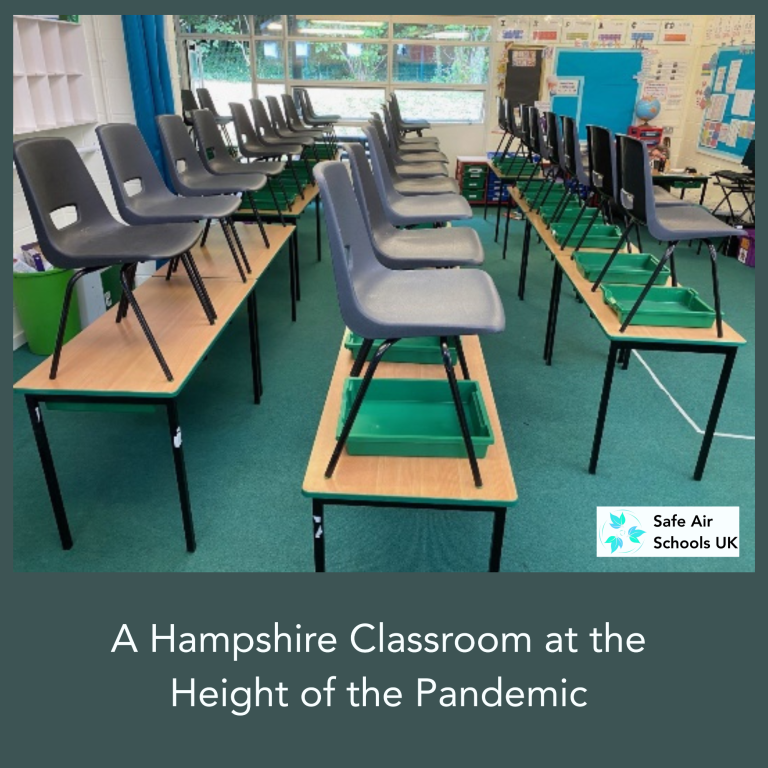
In recent years, the COVID-19 pandemic has brought renewed attention to indoor air quality and the role that ventilation and air cleaning play in reducing the spread of airborne diseases.
This renewed focus has driven a growing movement to improve indoor air quality in schools and other public buildings. Supported by advances in scientific understanding, the clean air movement is helping to ensure that everyone has access to healthier indoor spaces where they can learn, work, and thrive.

Donate to Support Safe Air Schools
Community Interest Company No. 16405838. Registered Office: Southgate Chambers, 37 Southgate Street, Winchester, Hampshire. England, SO23 9EH
©2026 Safe Air Schools UK CIC