
.
.
.
Air Filtration
When sunlight streams through a window, you might notice tiny particles floating in the air, such as dust, pollen or smoke. But what you can see is just a fraction. Invisible pollutants like bacteria, allergens, and viruses drift unseen. Air filters capture these microscopic threats removing up to 99.97% so our lungs don't have to.
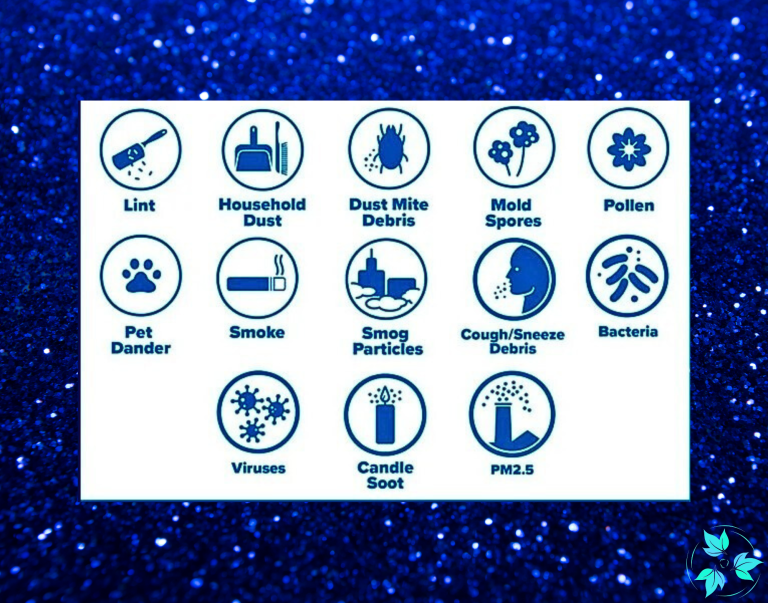
Cleaning Air
Portable air cleaners (also known as “air purifiers” or "air filters") use a technology called HEPA (High Efficiency Particulate Air) to filter the air.
Some models consume less energy than a light bulb and remove particles as small as 0.3 microns.
They are used in addition to natural ventilation because they do not reduce CO2 levels or affect a room's humidity.
Market Regulation
The portable air cleaner market is poorly regulated, and consumers are often confronted with misleading marketing, exaggerated claims, and inconsistent performance metrics. As a result, comparing different devices can be challenging. To highlight these issues, encourage informed discussion, and identify the most effective portable air cleaners for schools, we partnered with HouseFresh to evaluate a range of filters and demonstrate how performance and cost can vary substantially between models. Working alongside HouseFresh, we are also on a mission to identify the best portable air filtration solutions for schools through independent, evidence-based assessment.
Given the lack of consistent regulation and the prevalence of unverified performance claims, independent evaluation is essential. The TAPAS (Tackling Air Pollution At Schools) network advocates for accredited organisations to provide objective assurance of the safety and effectiveness of air cleaning devices in realistic settings, considering both biological and chemical pollutants. This aligns closely with our own efforts to identify high-performing air filtration solutions for schools through transparent, evidence-based assessment.
Portable Air Cleaner Comparison
Safe Air Schools UK compared 26 low-maintenance DIY and commercial air cleaners that were immediately available in the UK, using independent third-party performance data from HouseFresh (May 2026).
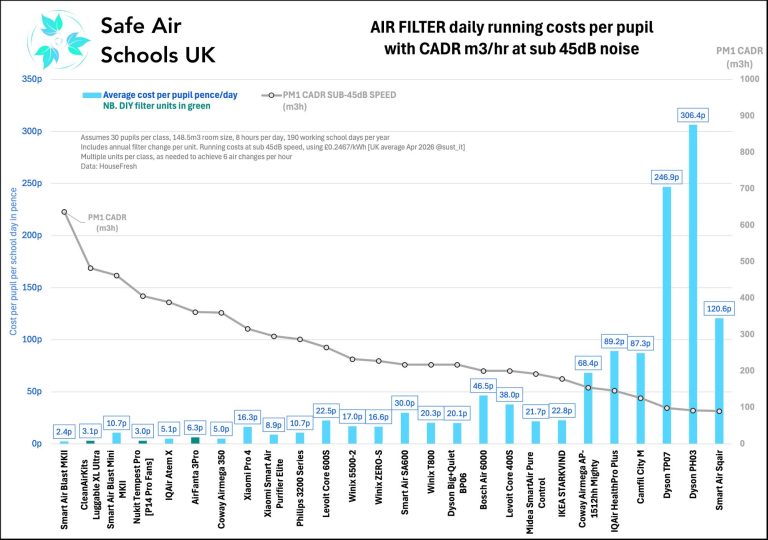
This chart shows that clean air can be provided for 3 pence per child, every day.
Pennies Per Pupil/Day
A 3p Solution
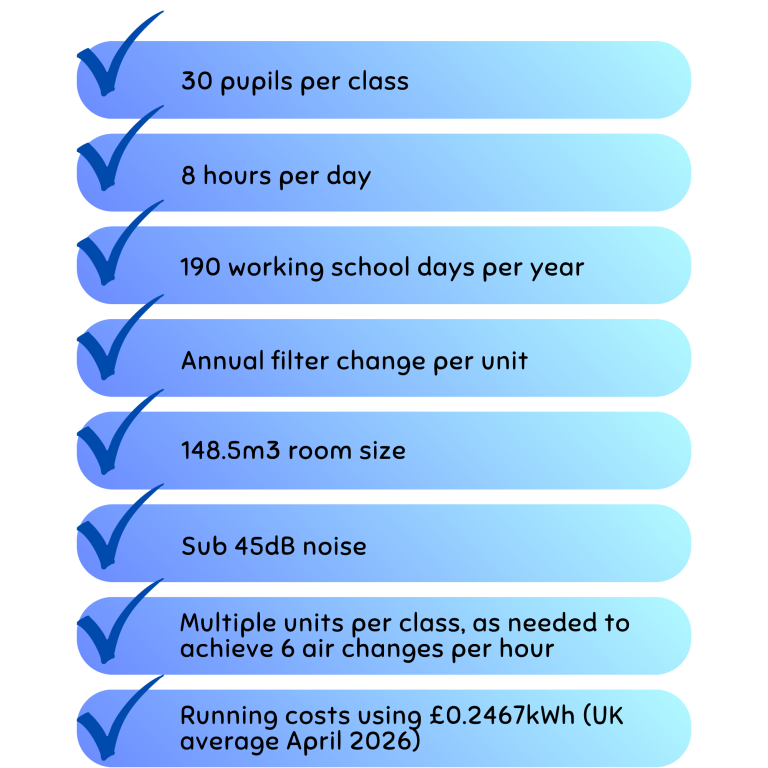
The comparison showed that cost and air-cleaning performance vary widely, with some lower-cost units outperforming much more expensive models. HouseFresh's "How to Choose an Air Purifier" similarly emphasises the importance of independent testing, appropriate sizing, noise levels, and ongoing filter costs. Together, these findings highlight why schools should assess air cleaners against a range of practical and technical criteria rather than relying on price or manufacturer claims alone.
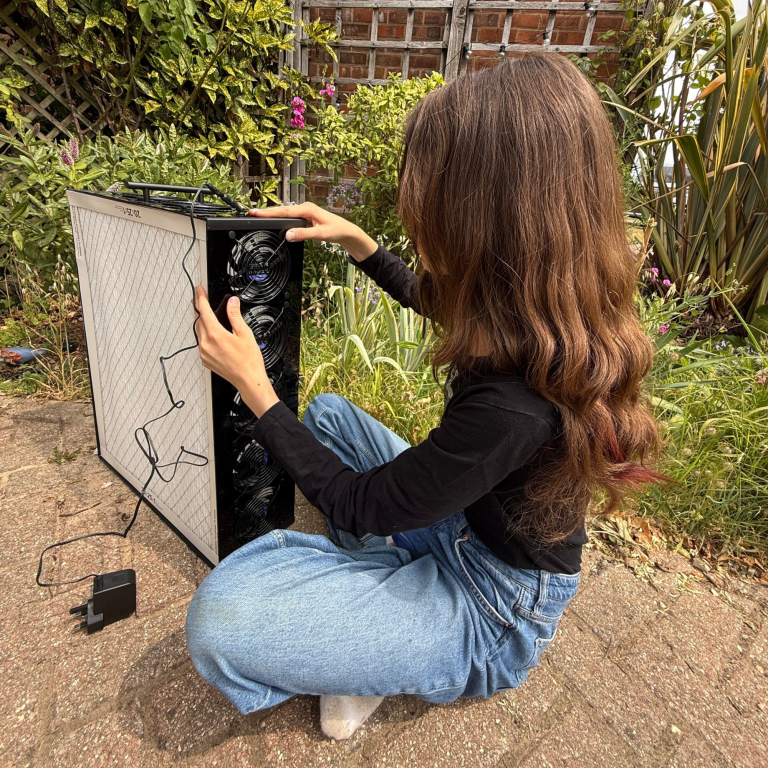
How to Build a DIY Air Filter
A Corsi-Rosenthal Box (CR Box) made with PC Fans is available to order in the UK. It has been tested by HouseFresh and appears on our Air Filter Comparison Chart.
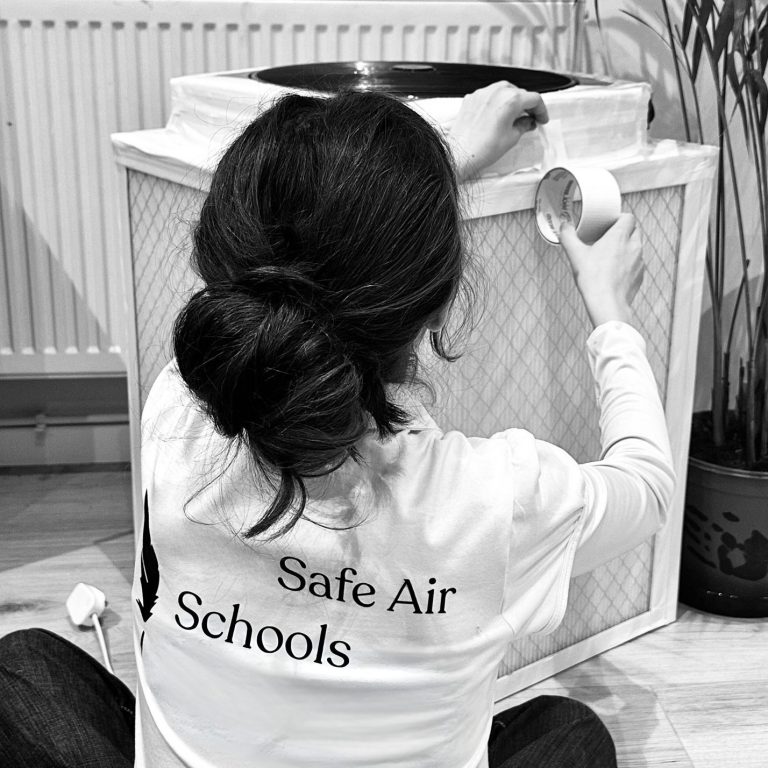
A Corsi-Rosenthal Box (CR Box) made with the original, tested Vent Axia fan, no longer available in the UK.
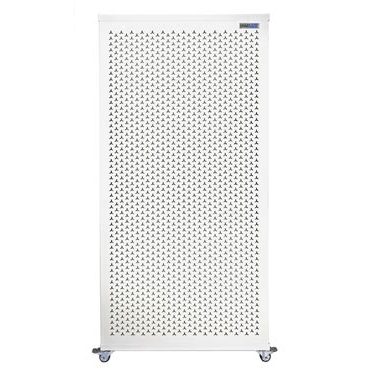
How to Chose a Commercial Air Filter
Choosing a safe, cost-effective and efficient air filter for a hall, classroom or corridor requires knowledge and basic calculations. Where possible, please consult a mechanical/ventilation engineer to help assess the building’s ventilation. Your school's Local Authority or Trust should provide this service.
This may not always be possible. While we wait for cost-effective, efficient solutions from the Department for Education, the following guides have been selected by independent expert guidance.
Choosing a Portable Air Filter: Key Considerations
Classroom Dimensions
Find the classroom volume. As classroom sizes vary significantly across the UK, we used average classroom dimensions when calculating the air-cleaning requirements shown in our chart.
Need
The primary challenges in schools are clearing PM2.5 and airborne pathogens such as viruses. Choose an air cleaner with a HEPA filter and an activated carbon filter for wildfire smoke.
Type of Filter
There are several types of air filters to choose from. MERV 13 HEPA filters are one of the best options for classrooms.
HEPA stands for High-Efficiency Particulate Air filter. These filters can remove at least 99.97% of airborne allergens and pollutants, helping to keep indoor air clean and healthy.
MERV, ,or Minimum Efficiency Reporting Value, is a rating that measures how well a filter captures particles between 0.3 and 10 microns (µm). A higher MERV rating means the filter is more effective at trapping smaller and more specific particles.
Another common type is the activated carbon filter, which uses activated charcoal to remove odours, chemicals, and smoke from the air. While these filters don’t capture allergens or bacteria and need to be replaced regularly, they can be a useful addition for improving air freshness.
Other options include ionic, ultraviolet (UV), and ozone filters.
Cost, Claims and Hidden Extras
One useful comparison is Clean Air Delivery Rate (CADR) per pound (£), which helps assess how much clean air you get for your money. However, a high CADR value doesn’t always mean better performance in real-world use. If a unit is noisy at higher fan speeds, staff may turn it off, reducing its overall effectiveness.
Some air purifiers include built-in technology or extra features that can significantly raise the price without offering any benefits. In most cases, simple air filters are best. Be cautious with devices that add substances to the air or alter its chemical composition, as these can potentially affect indoor air quality.
Filter replacement frequency, and ongoing maintenance costs are also important factors to consider when selecting the right purifier.
Efficiency
Not all portable air filters are created equal, and that’s where the Clean Air Delivery Rate (CADR) comes in. CADR is an industry-standard measure that provides a reliable way to compare one air purifier with another. It indicates the total volume of clean air a purifier produces each minute, measured in cubic feet per minute (CFM). In simple terms, it shows how powerful and effective the unit is at cleaning the air.
A higher CADR rating means the purifier can clean the air more quickly and efficiently. In contrast, a lower CADR rating may struggle to remove pollutants effectively, which could leave students and staff exposed to harmful airborne particles.
When choosing an air purifier for a classroom, ensure the device’s CADR is sufficient to purify the air at least six times per hour. Depending on the room size and layout, more than one unit may be needed to meet recommended safety and efficiency standards.
Guidelines
Air changes per hour
The World Health Organisation recommends six air changes per hour (ACH) in schools.
Air flow
Ventilation is measured in litres per second per person in the space. Many experts, including the World Health Organisation, recommend a minimum of 10 litres per second per person.
Noise
It is recommended that noise levels be maintained below 40-45 decibels.
Available Space
UK classes typically comprise 30 students, and space is in short supply. Some units require placement in the centre of a room or raised from the floor. Some spaces will require more than one air filter. Experts state that having several air filters spaced around a room provides more effective filtration than a single filter.
Available Plug Sockets
More than one filter may be required per class, so sufficient plug sockets are needed.
Replacement Filters
Filters will need to be replaced and periodically cleaned. The price of each filter, how quickly and practically it is to replace and source them, are all important considerations for schools. Manufacturer's recommendations on maintenance and replacement should be followed. Some machines have a carbon filter as standard or offer this as an option. It removes gaseous contaminants from the air that the HEPA filter cannot. It isn't needed to mitigate against viruses.
Experts warn: Avoid additive air cleaning methods or similar products such as ionisation until there is a standardised way to ensure their safety and effectiveness.
Sources and References

Donate to Support Safe Air Schools
Community Interest Company No. 16405838. Registered Office: Southgate Chambers, 37 Southgate Street, Winchester, Hampshire. England, SO23 9EH
©2026 Safe Air Schools UK CIC