.
Toolkit
This toolkit shares existing guidance and standards, outlining where they no longer reflect the latest evidence, along with data and tried-and-tested practical resources to assist conversations and inform decision-makers. If you find something useful, all we ask is that you kindly reference Safe Air Schools UK as a courtesy and share our website in case it helps others.
From playgrounds to corridors and classrooms, every child deserves to breathe clean air in the place that shapes their future.
Same Air, Same Standards
Global Open Indoor Air Quality Standards for Schools (GO IAQS for Schools) supports healthier classrooms through science-based indoor air quality standards. Developed by GO AQS, the framework links clean air to children's health, wellbeing and learning.
DfE Guidance: Ventilation and Air Quality in Education and Childcare Settings
Guidance for schools updated in 2026.
Refer to the Union's guidance below, for health-based CO2 thresholds.
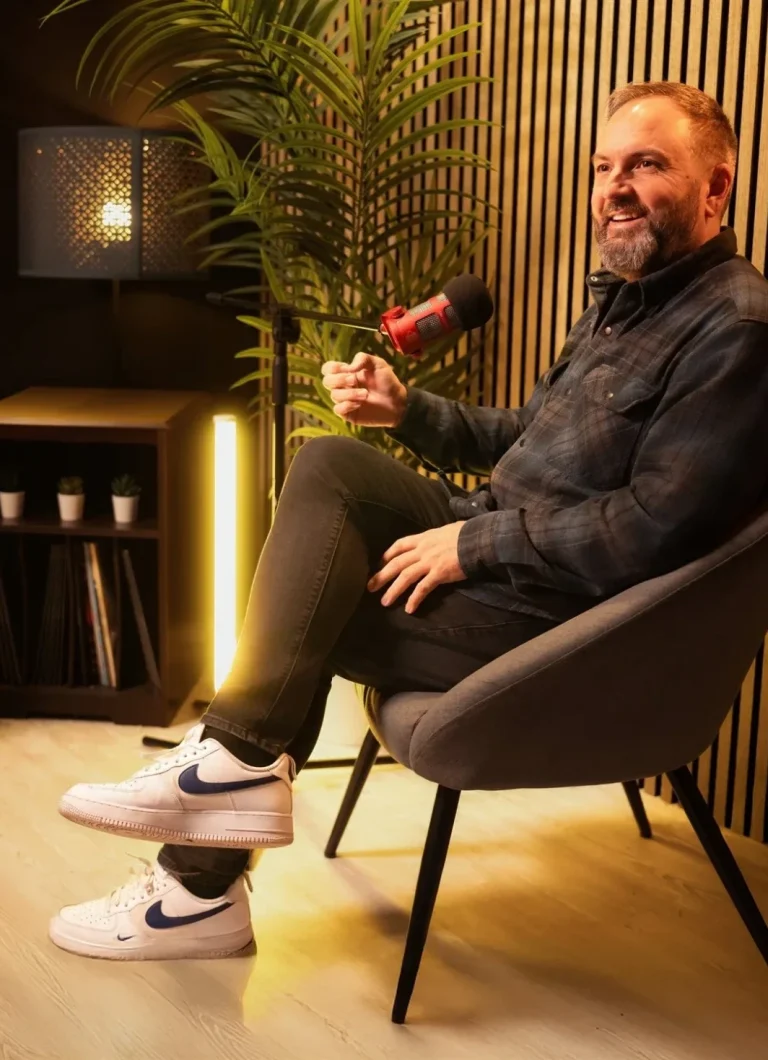
Short Video Discussing the Updated DfE Ventilation and Air Quality Guidance
The Air Quality Matters Podcast talks to leaders across the world and across sectors to discuss indoor air quality, ventilation and health. With over 20 years of experience, host and consultant Simon Jones discusses the updated DfE Ventilation Guidance in less than 10 minutes and what it means. A worthwhile share with all those invested in healthy and safe learning environments.

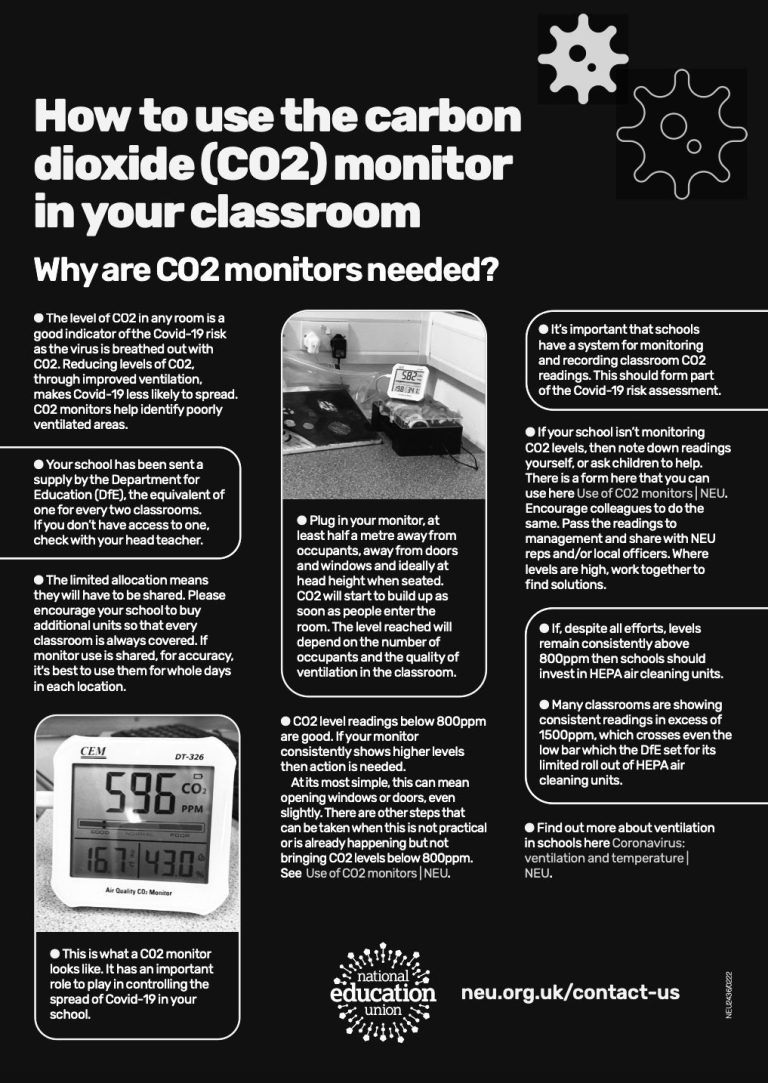
How to Use A CO2 Monitor In Classrooms
A comprehensive poster from the National Education Union. See also Health And Safety Executive and the Department for Education.
Ventilation Tips
Advice from the Schools' Air Quality Monitoring for Health and Education project. The SAMHE project was funded by the Department for Education and Engineering and Physical Sciences Research Council
Department for Education Guidance on CO2 monitors and air cleaning units
- Monitors should be used regularly.
- The process of purchasing new cleaning units. See the tools below for evaluating air filter cost-effectiveness

Department for Education
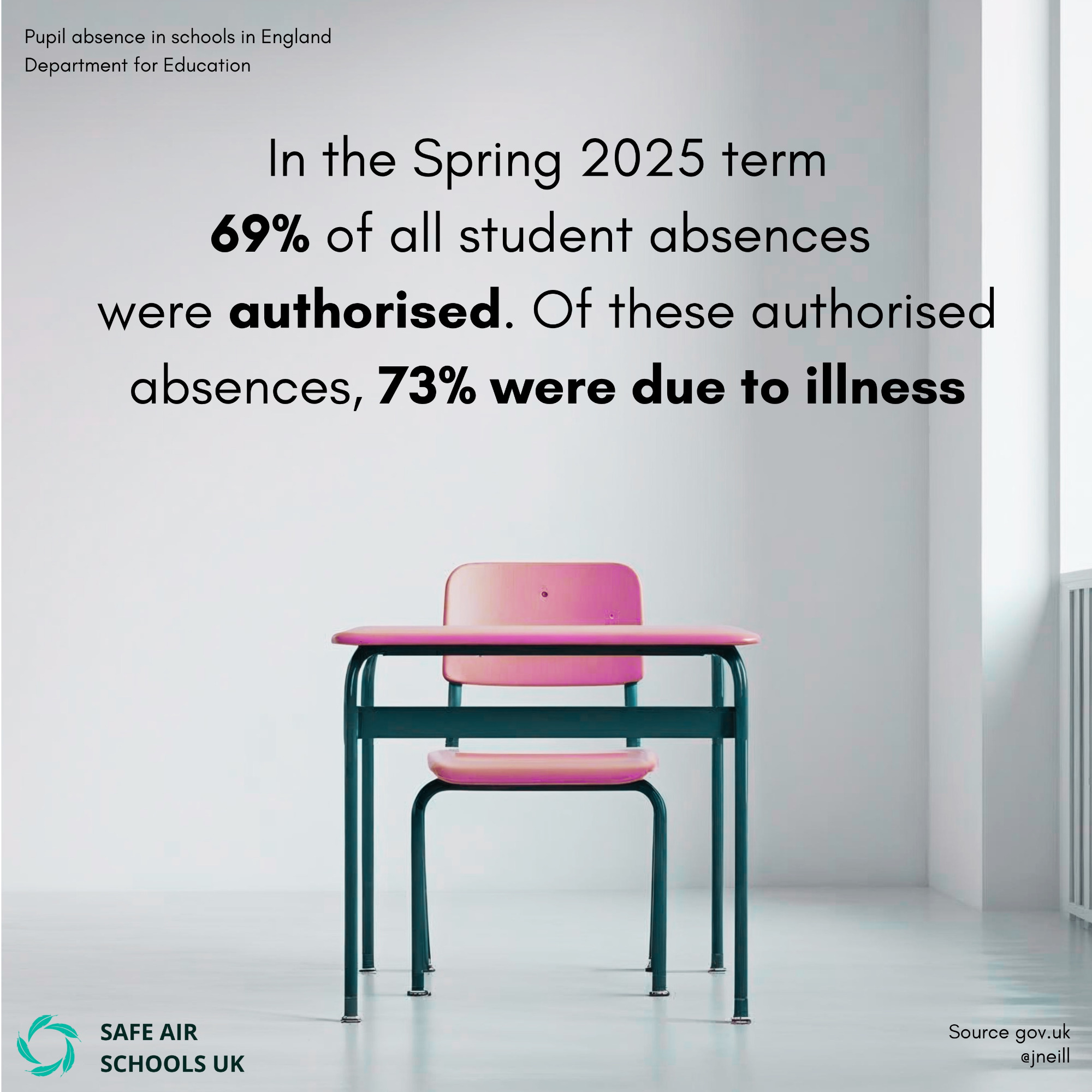
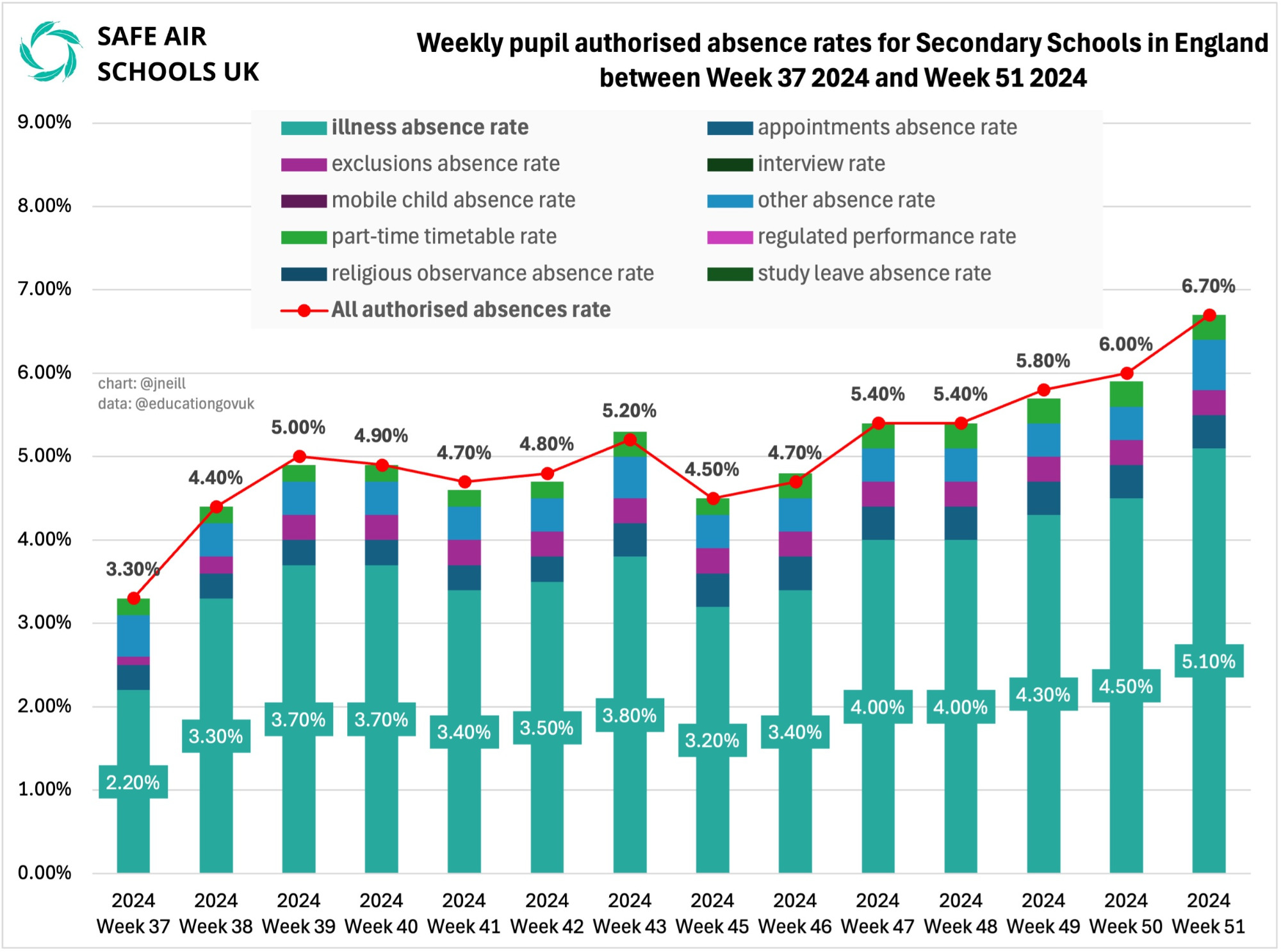
Illness is the leading cause of absence. How ventilation, air filtration and other measures help.

Data Gallery
Every piece of data we provide is evidenced and independently verifiable






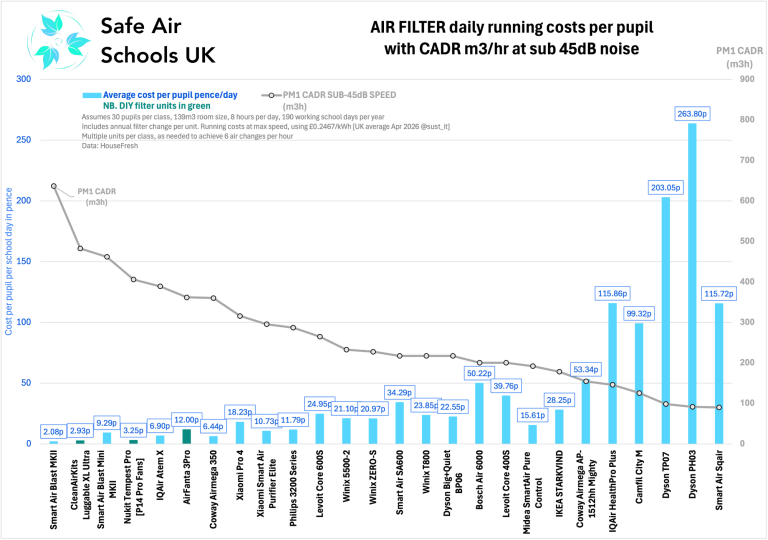
Healthy classroom air for pennies per pupil per day
Evidenced with third party independent data
Safe Air Schools UK compared 26 immediately available, low-maintenance commercial air purifiers using independent, third-party test data from HouseFresh (May 2026).
The chart illustrates that cost and performance vary widely. For £9, a child can breathe clean air in class throughout the year.
*Assumes 30 pupils per class, 8 hours per day, 190 working school days per year. Includes an annual filter change per unit. Max speed running costs at £0.25/kWh. Multiple units per class, as needed to achieve 6 air changes per hour.
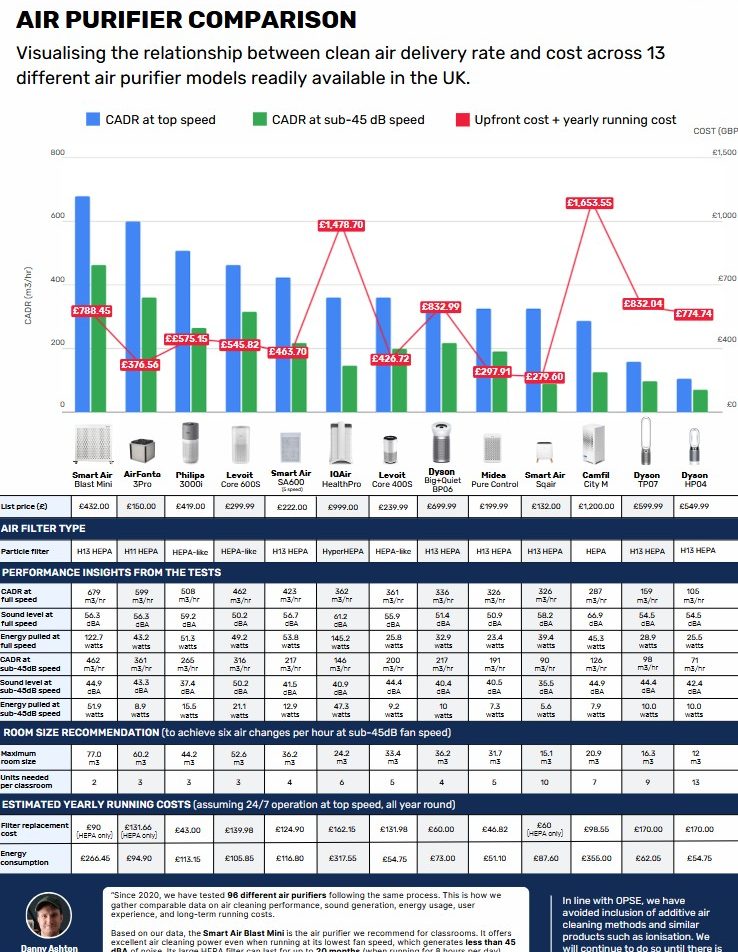
Air Purifier Comparison
A UK chart illustrating variation in air purifier performance. Produced in partnership with HouseFresh, utilising independent, third-party test data. February 2025.
Urban Greening 'How To' Toolkit For Communities
This practical resource offers science-based guidance to help councils, community groups and residents design, plan and implement tailored green projects. This includes work around schools, to create cleaner air, cooler spaces and healthier, more resilient communities, now and in the future.
We are pleased to be part of the team behind this toolkit.

How to Chose A Commercial Air Filter
Choosing a safe, cost-effective and efficient air filter for a hall, classroom or corridor requires knowledge and basic calculations. Where possible, please consult a mechanical engineer to help assess the building’s ventilation. Your school's Local Authority or Trust should provide this service.
This may not always be possible. While we wait for cost-effective, efficient solutions from the Department for Education, the following guides have been selected by independent expert guidance.

HouseFresh
HouseFresh is an Independent publication focused on air quality.
Read 'How to choose an air purifier: 10 things you need to know', for an objective overview.

Clean Air Stars
An independent organisation with a calculation tool to help guide air filter choices.

University of Melbourne
The School of Geography, Earth and Atmospheric Sciences provides a guide of Frequently Asked Questions About air filters.
DIY Air Filter
Written instructions on how to construct an air filter big enough for high occupancy classrooms.

TUCAN Resources
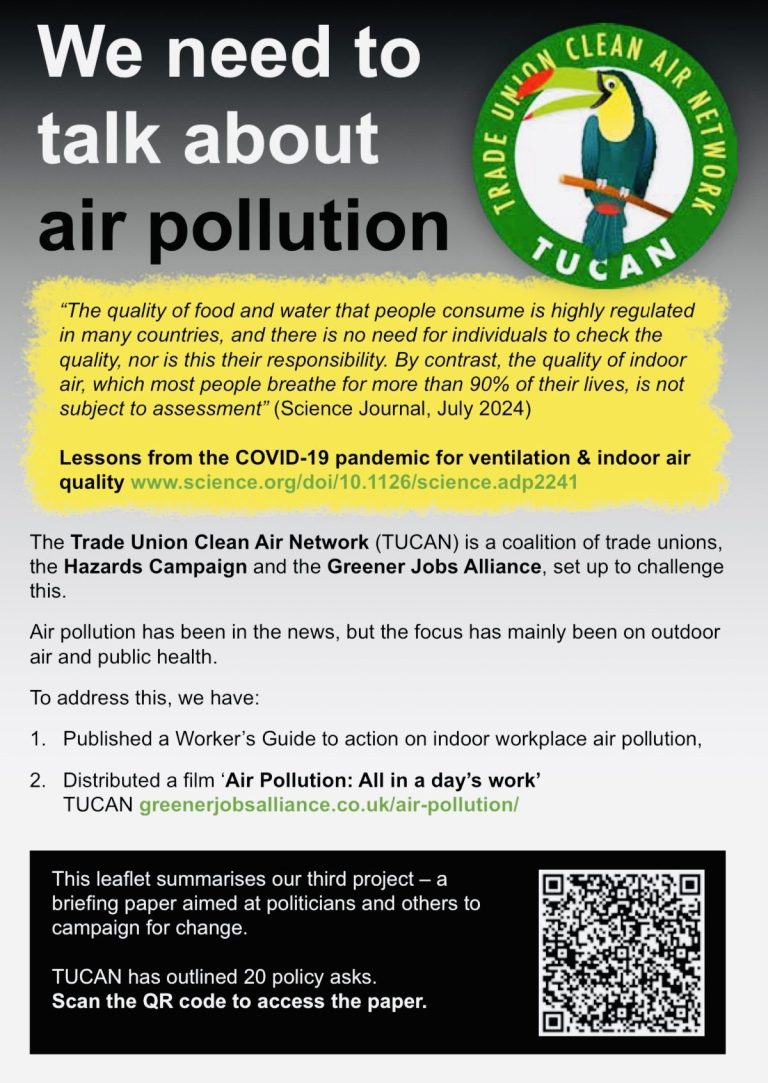
TUCAN is a coalition of 14 major trade unions, set up by Hazards Campaign and Greener Jobs Alliance, in 2019. TUCAN's view is that air pollution disproportionately impacts workers and was formed to make sure that air pollution in the workplace is given the attention it needs. The short film attached explains more.
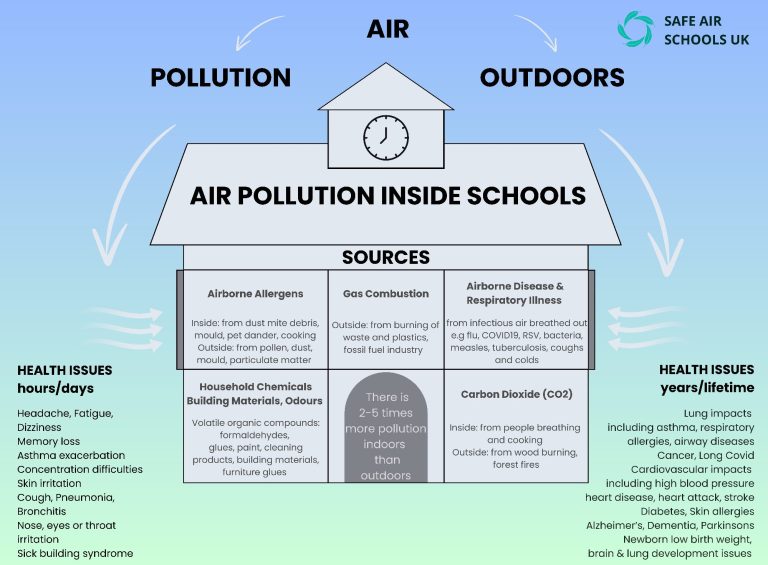
Air Pollution in Schools
A one-page visual connecting outdoor pollution around schools to indoor pollution sources, detailing both short-term and long-term health effects.
SAMHE Project
UK Research and Innovation funded SAMHE to work with schools to provide evidence, improve school air quality and link these to health outcomes and educational attainment.
Resources are available on their website together with their recommendations to the government.

The Clean Air App
Download this app to keep up-to-date with outdoor air pollution in your school's location.
Notifications from the App and Widgets serve as helpful reminders to act and take care of the air we breathe.
SMART Air
Smart Air provide open-source data and host educational workshops across the world, teaching people, including children, how to build DIY air filters and protect themselves from poor air quality.
Smart Air is a social enterprise and certified B-Corp promoting cost-effective, data-backed air filters to combat indoor air pollution.
YouTube Channel
Education
Information
Research
Evidence

Further Reading
Guides
BESA: Guides to Indoor Air Quality
Royal Academy of Engineers: Ventilation matters - why clean air is vital to health
Reports
The Impact of Climate Change on Child Health Around The World
Public Health Communication Centre. Long Covid in New Zealand; Preventative Action Needed
HSA Code of Practice for Indoor Air Quality
Safer Shared Air: A Critical Accessibility And Inclusion Issue
News
The Guardian: Indoor Air Quality Should be Monitored
Lessons from the Covid-19 Pandemic for Ventilation and Indoor Air Quality
Children With Long Covid are Suffering in Silence; The Myth That the Virus is Harmless in Kids
Homemade Air Filters Used In Welsh Schools to Clean the Air
Sick of Your Kids Being Sick? Clean Air In Schools May Be The Answer
